





With the intensification of research and development in newer fields of Science and Technology, there is an urgent need and increasing need to interpret the result of research to the people urgently and effectively. The researchers do researches on various fields of Ecology and Environment most of which remain in a closed formate without reaching the first hand for the implementation of their findings. But each and every research is a life saving work, in broader sense, save the whole world, confirs the existance of life on earth and and increase their longivity. Many more NGOs, educational institutions and other institutions are engaged in wildlife researches since past.
Until recently wetlands were considered a source of pollution, foul smell and as unclean, swampy places providing a breeding place for mosquitoes. But, the concept on wetlands has been changed. They perform manifold functions in the maintenance of the ecological balance of a region. Being dynamic ecosystems, they sustain all life and perform some useful functions in the maintenance of overall balance of nature. Fulfilling the food and habitat requirements of various water birds is one of the most important functions performed by wetlands as it helps to maintain biodiversity globally. The cavity nesting birds plays an important role as bio-indicator of the terrestrial as well as aquatic ecosystems.
The Cotton Pygmy-goose uses the wetlands for foraging and uses tree holes for nesting purposes. The old-aged trees, nearby the wetlands are preferably selected so that they can release their young ones in the wetland where they can feed and utilizes the habitat area of the wetland. Protection and conservation of major wetlands and their nearby terrestrial habitat area, critically important to waterfowl on their tradition utilization of the wetlands, is the first priority.
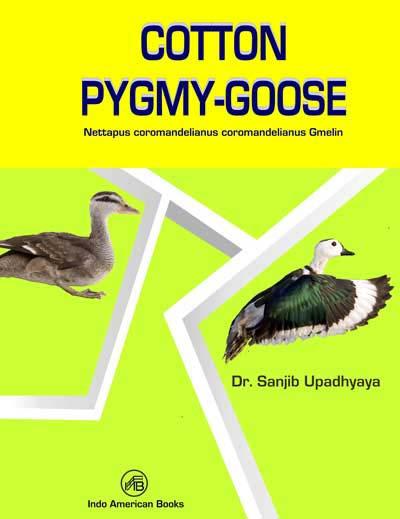
Cotton Pygmy-goose : Nettapus Coromandelianus Coromandelianus Gmelin
₹1,632.00
Cotton Pygmy-Goose : Nettapus Coromandelianus Coromandelianus Gmelin
Author: Dr. Sanjib Upadhyaya
Year Of Pub : 2017
Product ID: B000014
- Chapter 1: Introduction
- Chapter 2: Review of Literature
- Chapter 3: Study Area and Methodology
- Chapter 4: Distribution Pattern and Population Size
- Chapter 5: Morphometry
- Chapter 6: Foraging Ecology
- Chapter 7: Breeding Biology
- Chapter 8: Conservation Perspectives
- References
- Appendices



Reviews
There are no reviews yet.